
Treatment of Municipal Solid Waste (MSW) in India
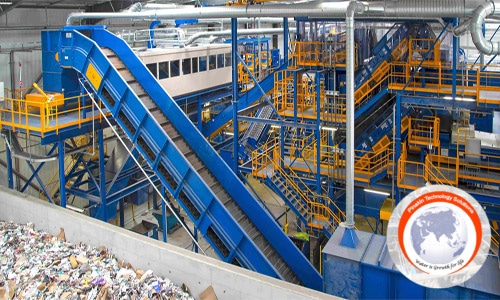
Pinaking technology solutions is one of the leading Indian companies, renowned worldwide for its cutting edge municipal solid waste recycling plant, which is exclusively designed and developed to recycle all types of municipal waste (MSW). Be it plastic, metal, textile, paper, leather, rubber, glass, soil material, garden waste or organic waste, our recycling plant has delivered outstanding performance and proven its efficacy and therefore it is highly demanded in the industries for the solid waste recycling.
The offered MSW recycling plant carried out thermo-chemical decomposition of the waste through pyrolysis process, wherein solid waste is heated at a certain temperature in the absence of the oxygen and under atmospheric pressure.
This process ensures complete decomposition of the waste and also gives valuable resources as an end product in the form of gas, liquid and solid, making it the most likable plant among the industries. Further, the easy functionality of this municipal recycling plant enables user setting the temperature and heating rate as per the requirement without any difficulty.
This MSW recycling plant can be used for the organic waste as well as mixture of organic and inorganic waste. Whether you are looking for slow, medium, fast pyrolysis, we have a broad range of reactors to choose from, which incorporates fixed bed, rotary kiln, microwave assisted, fluidized bed, single batch, semi batch, solar as well as plasma reactor.
FAQ
A Municipal Solid Waste Recycling Plant is a plant that uses a series of processes to process waste from all sorts of sources – including residents, businesses and public services. The system separates, sorts and processes waste for recycling.
What kind of waste can the plant process? The plant is capable of processing various kinds of municipal waste such as organic materials, plastics, paper, metal and other types of mixed solid waste. The plant capacity will vary according to plant configuration.
The waste usually goes through the processing stages of feeding, segregation, screening and material recovery. Further processing equipment can be added according to the nature of the waste and the end product.
It aids sorting of municipal waste management, extraction of recyclable and to minimize final disposal waste numbers. It could also support a more efficient processing of high quantities of the waste of various sorts.
Selection is based on the amount of waste to be disposed of per day, waste quality, necessary treatment capacity, available space and the recovery or treatment process that is necessary.